Sinking Funds: The Complete Step-by-Step Setup Guide
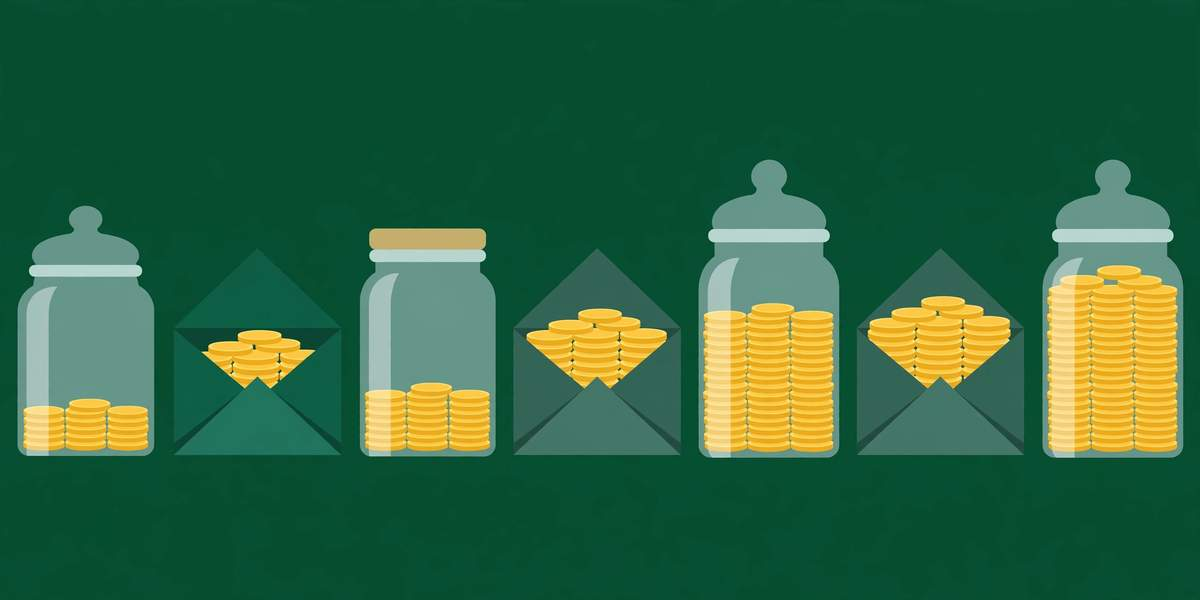
Here’s a familiar disaster: the car insurance bill arrives — $900, due in two weeks — and your budget explodes. You knew it was coming. It comes every year. Yet somehow it always feels like an emergency.
It’s not an emergency. It’s a predictable expense you didn’t plan for. Sinking funds fix exactly this: they turn big, irregular bills into small, boring monthly savings. Here’s how to set them up, step by step.
What sinking funds are (and why they work)
A sinking fund is money you set aside regularly for a known future expense. Car insurance due in December? Save one-twelfth of it each month from January. Holiday gifts? Same idea. The expense “sinks” gradually into your budget instead of crashing into it.
Why they work so well:
- No more “surprise” bills. The surprises were never surprises — you just weren’t saving for them.
- Your emergency fund stays intact. True emergencies stay rare when predictable expenses have their own funding.
- Budgeting gets calmer. Monthly spending stops swinging wildly, which makes every other financial habit easier.
Common sinking fund categories: car insurance and maintenance, home repairs, annual subscriptions, holidays and gifts, travel, medical/dental costs, pet expenses, and clothing.
Sinking funds vs. emergency fund: know the difference
People mix these up, and the distinction matters:
- Emergency fund = for the unexpected. Job loss, sudden illness, emergency repairs. You hope never to use it.
- Sinking fund = for the expected but irregular. The annual insurance premium, Christmas, the car service. You will use it — that’s the plan.
You need both. An emergency fund with no sinking funds gets drained by predictable bills. Sinking funds with no emergency fund leave you exposed to real surprises. Build them in parallel: even a small starter emergency fund alongside your first sinking funds is a solid position.
The 6-step sinking fund setup
Step 1: List your irregular expenses
Brain-dump every expense that doesn’t hit monthly but you know is coming within the next 12 months. Check last year’s bank statements — that’s where forgotten annual bills hide. Typical finds: car insurance, vehicle registration, annual subscriptions (streaming, domains, memberships), holiday gifts, vacations, back-to-school costs, annual medical checkups, pet vaccinations, home maintenance.
Step 2: Attach a cost and a due date to each
Next to each item, write your best estimate of the cost and when it’s due. Use last year’s actual amount where you have it; estimate generously where you don’t. Underestimating is the classic sinking fund mistake — round up, not down.
Example:
- Car insurance: $900, due December
- Holiday gifts: $600, due December
- Annual streaming/services: $240, due March
- Car service: $400, due July
- Vacation: $1,200, due August
Step 3: Divide by the months remaining
This is the core math: total cost ÷ months until due = monthly savings amount.
- Car insurance: $900 ÷ 12 = $75/month
- Holiday gifts: $600 ÷ 12 = $50/month
- Streaming/services: $240 ÷ 6 (starting now for March) = $40/month
- Car service: $400 ÷ 10 = $40/month
- Vacation: $1,200 ÷ 11 = ~$110/month
Total: about $315/month across five funds. That’s the real cost of those “surprise” bills, made visible.
Step 4: Set up separate homes for the money
Money for future bills must live apart from spending money. Best options:
- A savings account with sub-accounts or buckets (many online banks offer these free) — one bucket per fund, all visible in one place.
- Separate savings accounts per category, if your bank doesn’t do buckets.
- A simple spreadsheet tracking balances, if you must keep it in one account — but physical separation works better for most people.
Name each bucket after its purpose: “Car Insurance,” “Christmas,” “Vacation.” Named money gets spent on its purpose.
Step 5: Automate the monthly transfers
On payday, automatic transfers move each fund’s monthly amount into its bucket. One transfer per fund, or one lump transfer you split — whatever your bank supports. Automation is what makes sinking funds effortless; manual transfers are what makes them die by month three.
Step 6: Spend from the fund — guilt-free — then refill
When the bill arrives, pay it from its bucket and enjoy the strangest feeling in personal finance: a big bill that causes zero stress. Then immediately restart that fund’s monthly contributions for next year. A sinking fund is a cycle, not a one-time project.
Example: a complete starter plan
Here’s what a realistic five-fund setup looks like for a typical household:
| Fund | Annual cost | Monthly saving |
|---|---|---|
| Car insurance + maintenance | $1,300 | $108 |
| Holidays + gifts | $600 | $50 |
| Annual subscriptions | $240 | $20 |
| Travel | $1,200 | $100 |
| Home maintenance | $900 | $75 |
| Total | $4,240 | ~$353 |
$4,240 a year in “surprises” — or $353 a month in calm, planned saving. Same money, completely different experience.
Where to keep sinking fund money
- Separate from checking. Non-negotiable. If it’s visible next to spending money, it becomes spending money.
- Easily accessible. Unlike an emergency fund, you’ll withdraw on schedule — so instant-access savings beats locked accounts.
- Earning something. A high-yield savings account keeps each fund growing slightly while it waits. We’re talking modest interest, not investment returns — the timeline per fund is under a year.
5 mistakes to avoid
- Forgetting irregular income-side timing. Some bills cluster (December is brutal). When setting monthly amounts, weight earlier months heavier for soon-due bills.
- Underestimating costs. Add a 10% buffer to every estimate. Bills rise; your memory of last year’s price is optimistic.
- Raiding funds for other spending. “Borrowing” from the vacation fund for takeaway is how funds die. If a fund is consistently raided, the budget — not the fund — needs fixing.
- Creating too many funds at once. Twelve micro-funds is overwhelming. Start with 3–5, add more later.
- Never reviewing. Revisit the list twice a year. Subscriptions get cancelled, cars get sold, kids’ costs change — your funds should change too.
Frequently asked questions
Q: What is the difference between a sinking fund and an emergency fund?
A: An emergency fund covers unexpected surprises — job loss, sudden medical bills. A sinking fund covers expected but irregular expenses — car insurance, holidays, annual subscriptions. You know these bills are coming; sinking funds just spread their cost across the year.
Q: How many sinking funds should I have?
A: Start with three to five covering your biggest irregular expenses: car costs, home maintenance, gifts and holidays, travel, and annual bills. You can add more once the habit sticks, but starting small keeps it manageable.
Q: Where should I keep sinking fund money?
A: In a separate savings account — ideally one that lets you create sub-accounts or “buckets” for each fund. Keeping it apart from everyday spending money is the whole point; if it sits in checking, it will get spent.
Q: What if I cannot afford to fund all my sinking funds at once?
A: Prioritize by due date: fund the bill coming soonest first, then work down the list. Partial funding still beats zero — even half-funded, a bill hurts far less than one you saved nothing for. Add more funds as your budget allows.
Keep reading

How to Save for a House Down Payment Fast (Even on an Average Salary)
Saving a house down payment feels impossible until you build a system. Here's the step-by-step plan to hit your target faster — without extreme sacrifice.
Read more →
The No-Spend Challenge: A 30-Day Guide That Actually Works
Thinking of trying a no-spend month? Here's the complete guide: the rules, what's allowed, a prep checklist, and how to survive all 30 days.
Read more →
Lifestyle Creep: The Silent Budget Killer (and How to Beat It)
Got a raise but still broke? That's lifestyle creep. Learn the 7 warning signs and the exact system that keeps your raises in your pocket — not your landlord's.
Read more →